


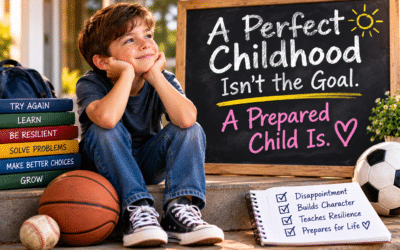
Somewhere along the way, parenting started feeling like a full-time job dedicated to keeping our children happy. Happy at breakfast. Happy at school. Happy during activities. Happy at dinner. And, if we’re really ambitious, happy when it’s time to turn off the television and go to bed. Good luck with that last one. But here’s something I’ve come to believe about parenting: our job isn’t to make our children happy every minute of every day. Our job is to prepare them for life.
And life, as we all know, isn’t always comfortable, entertaining, or fair. Sometimes life requires doing things we don’t want to do. Sometimes we have to wait. Sometimes we’re disappointed. And sometimes we have to clean the kitchen even though we’d much rather be sitting on the couch. The sooner our children learn these lessons in a loving, supportive environment, the better prepared they’ll be when they’re out in the world making decisions on their own.
It’s Okay for Kids to Be Bored
“I’m bored!” Is there a parent alive who hasn’t heard those two words? Your child can have a room full of toys, access to books, a bicycle, art supplies, a backyard, and enough entertainment options to occupy a small country. And somehow, there’s absolutely nothing to do. Our instinct is often to jump in with suggestions, activities, or a screen to keep them entertained.
But boredom isn’t necessarily a problem that needs solving. Sometimes it’s an opportunity. When children have unstructured time, they can learn to entertain themselves, explore their interests, use their imaginations, and figure out what to do next. They might build something, invent a game, draw a picture, or discover that the bookshelf contains actual books. Imagine that! We don’t have to fill every quiet moment with an activity. Sometimes the best response to “I’m bored” is simply, “I bet you’ll think of something.”
Chores Aren’t Punishment — They’re Preparation
Let’s talk about chores. Nobody particularly enjoys reminding children to pick up their clothes, put away dishes, or clean their rooms. And judging by the reactions some kids have to being asked to empty the dishwasher, you would think we’d assigned them twelve hours of hard labor. But chores serve a purpose far beyond keeping the house clean.
Teaching kids responsibility begins with helping them understand that being part of a family means contributing to the family.
Even young children can participate in age-appropriate ways. A preschooler can put toys in a basket. An elementary-age child can help set the table. Older kids can learn to do laundry, prepare simple meals, and take care of their belongings. Will they do everything perfectly? Absolutely not. Will you occasionally want to redo the job yourself? Probably. But the goal isn’t perfection. It’s progress.
A child who learns to contribute at home is developing habits they’ll need later when they’re managing a household, working with others, or living independently. And one day, when your grown child knows how to wash a load of laundry without turning everything pink, you’ll know those lessons paid off.
Let Them Experience Disappointment
This one can be especially difficult. As parents, we naturally want to protect our children from hurt feelings. When they don’t make the team, aren’t invited to a party, receive a disappointing grade, or don’t get something they desperately wanted, we feel their disappointment right along with them. Sometimes we feel it even more. But disappointment is part of life.
And while we should absolutely offer comfort, encouragement, and understanding, we don’t always need to rush in and make the disappointment disappear. Instead, we can help children learn to work through those feelings.
We can say: “I know you’re disappointed.” “That really didn’t turn out the way you hoped.” “What do you think you might try next time?” These conversations teach children that difficult feelings are manageable. They also teach an important lesson: not getting what you want doesn’t mean you can’t be okay. Of course, there are times when parents should step in, particularly when a child is being treated unfairly or needs protection. But ordinary disappointments can become opportunities to develop resilience.
Saying No Is Sometimes an Act of Love
Here’s a parenting truth that doesn’t always win us popularity contests. Sometimes the answer is no. No, we’re not buying another toy. No, you can’t stay up until midnight on a school night. No, you don’t need the newest phone just because someone else has one. And no, cookies do not count as a vegetable, no matter how creatively you explain the ingredients. Children may not appreciate those answers in the moment. That’s okay.
Setting reasonable boundaries helps children understand limits, practice patience, and develop self-control. It also teaches them that love isn’t measured by how often someone says yes. We can be kind and understanding while still being firm. A loving boundary doesn’t require a lengthy courtroom defense every time it’s challenged. Sometimes “I understand you’re disappointed, but the answer is still no” is enough.
Stop Doing Everything for Them
It’s often faster and easier to do things ourselves. We can pack the backpack, tie the shoes, make the lunch, find the missing homework, and solve the problem in a fraction of the time it takes to guide a child through doing it independently. But when we constantly step in, we may unintentionally send the message that our children aren’t capable. Learning independence requires practice.
It also requires patience from parents. Let younger children try age-appropriate tasks, even when they’re slow or messy. Let older children take increasing responsibility for their schedules, assignments, belongings, and decisions. Offer guidance when they need it, but resist the temptation to manage every detail. Yes, mistakes will happen. That’s part of learning. The goal is to gradually move from doing everything for our children to helping them develop the confidence and skills to do things for themselves.
Happiness Isn’t the Only Goal
Of course, I want children to have happy childhoods. I want them to laugh, play, feel loved, make wonderful memories, and enjoy being kids. But I also want them to become adults who can handle challenges, contribute to their communities, build healthy relationships, and take responsibility for their choices. Those qualities don’t develop simply because we make everything easy. They grow through everyday experiences.
Doing chores when they’d rather play. Trying again after something doesn’t work. Hearing no and learning to accept it. Finding something creative to do when they’re bored. Solving a problem without Mom or Dad immediately stepping in. None of these experiences has to be harsh or unkind. Children still need support, encouragement, affection, and plenty of opportunities for fun.
We can give our children a joyful childhood without removing every challenge from it.
We’re Raising Future Adults
One day, our children won’t need us to remind them to brush their teeth, finish their homework, or put their dishes in the sink. They’ll be making their own decisions. Managing their own responsibilities. Building their own families and relationships. And navigating a world that won’t always give them exactly what they want. When that day comes, I hope we’ve given them more than wonderful childhood memories.
I hope we’ve given them confidence. Resilience. Compassion. A strong work ethic. And the ability to handle life’s ordinary challenges without falling apart. So the next time your child complains about being bored, grumbles about chores, or gets upset because you’ve said no, remember this: You aren’t failing because your child isn’t happy at that particular moment. You may be helping them learn something they’ll need for the rest of their life. And that is a pretty important part of parenting.
Your turn: What’s one responsibility or life skill you believe every child should learn before becoming an adult? Share your thoughts in the comments!


0 Comments